

Pigmy Banking, Cooperatives, અને Financial Inclusion ની Insights.
કાગળથી ડિજિટલ: તમારો પિગ્મી પૉર્ટફૉલિઓ EzPigmy પર સ્થળાંતર
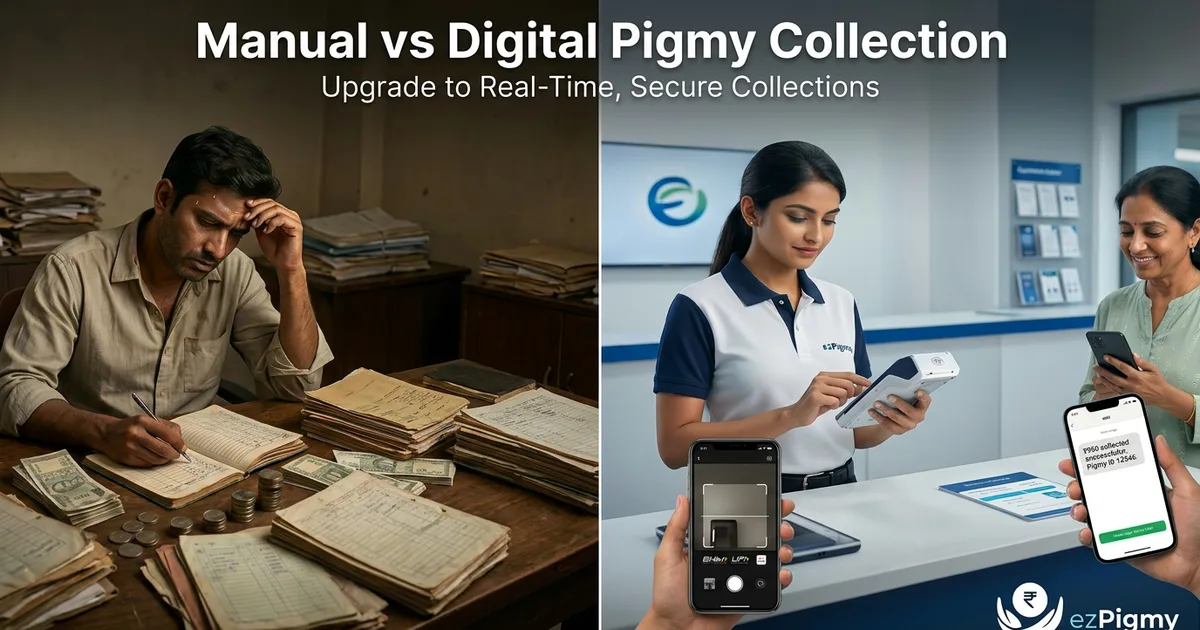
For a cooperative bank with an established pigmy portfolio, the prospect of moving to a digital system raises legitimate concerns. Members are accustomed to their passbooks. Agents have learned routines they trust. Branch staff have reconciliation workflows built around paper records. Digital migration has to respect all of this — not disrupt it carelessly.
This guide provides a practical migration path for banks moving from manual pigmy to EzPigmy. The approach is phased, reversible at each step, and designed to protect member relationships throughout.
Phase 1: Preparation (Weeks 1–2)
Before a single agent takes a device into the field, three things must be in place.
Member data import: All existing member accounts, balances, deposit histories, and scheme parameters need to be in the EzPigmy system before the first digital collection. The import can usually be done from the existing member register or account software. Our team assists with data mapping and validation.
Agent training: Agents need hands-on device time before their first live collection day. The training covers: creating entries, handling the receipt printer, working offline, and what to do when something goes wrong. Two to three hours of training is typically sufficient for agents who already know their member routes.
Parallel passbook decision: Decide upfront whether you'll run parallel physical passbooks during the transition. Most banks do for the first month — agents continue stamping passbooks while also making digital entries. It adds a step, but members can see both records and trust builds faster.
Phase 2: Pilot Branch (Weeks 3–6)
Start with one branch — ideally one with a manageable agent count (10–20 agents) and a manager who is comfortable with new systems. Run the pilot for a full month.
During the pilot:
- Monitor daily that digital totals match cash deposits at end of day
- Review the branch dashboard each morning for anomalies
- Have the branch manager available for agent questions during the first two weeks
- Gather agent feedback weekly — they will identify friction points you didn't anticipate
The pilot month also generates your first clean digital member statements. Showing these to members is one of the most effective trust-building steps available. A printed digital statement covering 30 days of collections, formatted clearly and accurately, reassures members that the system works.
Phase 3: Parallel Operation (Months 2–3)
Expand to all branches, but continue the parallel passbook process for one more month. The overlap period serves two purposes: it gives you a full reconciliation reference between the digital record and the physical ledger, and it gives members time to get comfortable with digital receipts as their primary record.
During this phase, watch for:
- Any discrepancies between physical passbooks and digital records (these need immediate resolution — they may reveal data entry errors during the member import phase)
- Members who express concerns about the new system (personal reassurance from agents or branch staff works better than general announcements)
- Agents who are struggling with the device — identify early, provide additional support, don't let problems persist
Phase 4: Digital-First Operation (Month 4 Onward)
At this point, the digital record is the authoritative record. Physical passbooks become a secondary reference, updated periodically rather than at every collection. Some banks choose to discontinue passbooks entirely; others keep them updated quarterly or on request.
The reconciliation workflow shifts: instead of checking physical ledger against cash, managers use the EzPigmy dashboard to verify digital totals against cash deposits. The process is faster, and discrepancies — when they occur — are resolved with much more data.
Protecting Member Trust Throughout
The biggest risk in migration is losing member trust. Members have been handing cash to agents for years on the basis of a physical record they can hold. Replacing that with a digital system requires active reassurance, not just smooth technology.
Practical trust-building steps:
- Print receipts from day one: The thermal receipt from EzPigmy should feel as solid and reliable as the passbook stamp. Never skip the receipt.
- Provide passbook updates on request: During the first year, any member who wants their passbook updated should be able to get it. Don't make members fight for their record.
- Make statements available: Agents should be able to print a full member statement on request from the device. Members who can see their complete history stay confident.
- Be transparent about what changed: Brief members directly on what has changed and why. Most members understand "the app replaces the ledger book" — they just need to be told, not surprised.
What to Expect After Migration
Banks that have completed the migration to digital pigmy collection report consistent improvements in three areas: reconciliation time (down significantly), fraud incidents (down to near zero), and member dispute resolution time (down from hours to minutes).
The transition takes effort. But the operational foundation it builds — tamper-proof records, real-time visibility, clean audit trails — is not achievable with paper, regardless of how carefully the paper system is managed.
Ready to plan your migration? Our implementation team has guided cooperative banks through this process from preparation to full digital operation. Contact us to start the conversation.
Related Posts
ezPigmy
શું તમે તમારા Pigmy Collection ને Digital બનાવવા તૈયાર છો?
Cooperative Banks ને Leakage દૂર કરવા, Agents ને Real-Time Track કરવા અને તરત Reconcile કરવા ezPigmy કેવી રીતે મદદ કરે છે તે જુઓ.
Free Demo Request કરો