

Your Head Office Finds Out a Month Later. It Doesn't Have To.
If you run a bank or NBFC with more than a handful of branches, you already know this feeling: a branch is struggling, and you find out about it in a monthly review — three or four weeks after it started.
By the time the MIS report lands on your desk, the branch manager has usually already noticed. They may have mentioned it in passing. They may not have. Either way, head office is working from a snapshot that is already old news, trying to reconstruct what happened over the last thirty days from a spreadsheet.
For a bank with one branch, this lag is an inconvenience. For a bank with ten, twenty, or fifty branches, it is a structural blind spot — and it is the single biggest reason branch-level problems get expensive before anyone at head office sees them coming.
The Monthly MIS Report Is a Rear-View Mirror
Most multi-branch banks run oversight the same way: branch managers submit numbers, someone consolidates them into a report, and leadership reviews it at the end of the month or the quarter.
This works, technically. It also has three problems that get worse as the branch network grows:
It's backward-looking. A report on May's collections tells you what happened in May. It cannot tell you that Branch 7's session completion rate has been sliding for the past six days.
It flattens what needs to stand out. A spreadsheet with fifty rows of numbers does not tell you, at a glance, which three branches need a phone call today. Everything looks the same size until someone manually sorts and compares it.
It depends on self-reporting. The branch that is struggling the most is often the one least motivated to flag it early. Not out of dishonesty — out of hope that next week will fix it. Head office finds out when hope runs out, not when the problem starts.
None of this is a people problem. It is a visibility problem. Branch managers are doing their jobs with the information they have. Head office is making decisions with information that is structurally late.
What Real-Time Branch Oversight Looks Like
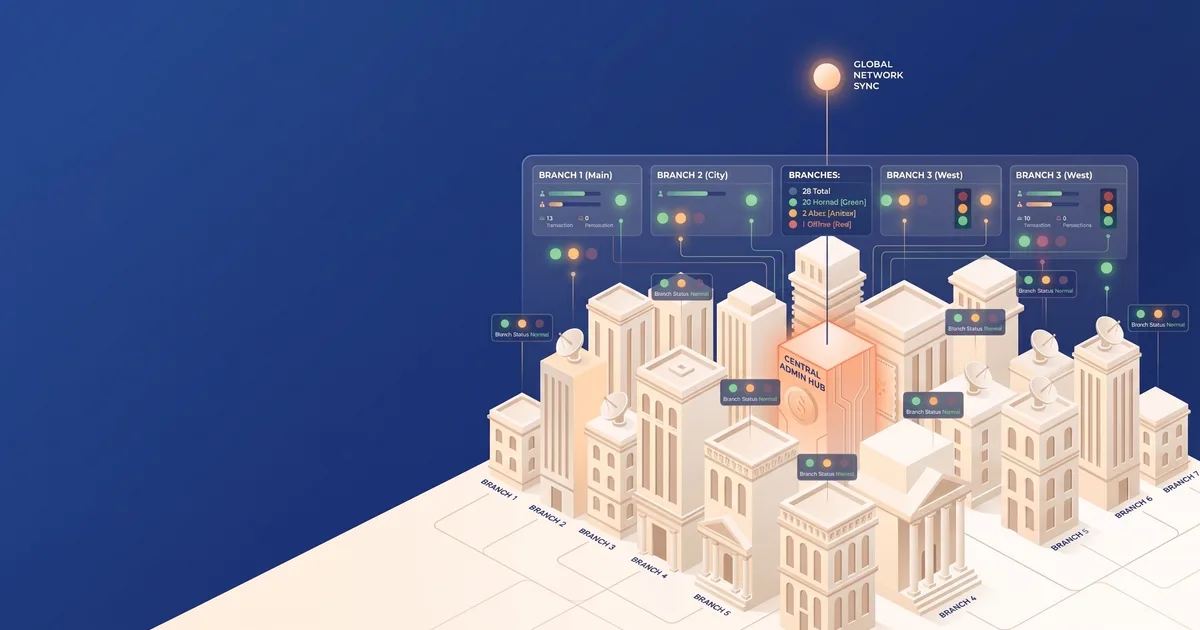
ezPigmy's admin dashboard was built to close that gap. It gives an Owner or Admin login a live, org-wide view of every branch — not a report that gets generated and emailed, but a screen that reflects what is happening right now.
A branch leaderboard, not a spreadsheet. Every branch appears as a row with a status: Healthy, Watch, or At Risk. Today's collections, month-to-date collections, session completion percentage, agents active out of total, devices active out of total, and accounts that are stalled or at risk — all in one table, sorted so the branches that need attention are easy to find, not buried alphabetically.
One click into any branch. Selecting a branch from the leaderboard opens its full dashboard — the same view its own branch manager sees, including its branch managers and their recent activity. No separate login, no waiting for someone to send you a screenshot.
Cross-branch comparison on any single metric. Beyond the leaderboard, individual KPIs — collections, session performance, agent utilization — can be compared side by side across every branch. This is what turns "Branch 7 looks low" into "Branch 7 is 30% below the next-lowest branch, and has been for four days."
Org-wide staff and agent visibility. Top-performing agents, agent utilization, and payment-method breakdowns roll up across the whole network, so performance patterns show up before they become a monthly surprise.
Branch managers, by contrast, see only their own branch — which keeps the dashboard focused for the people running day-to-day operations, and keeps org-wide comparison as a head-office capability, not something that turns into branch-vs-branch politics on the ground.
Why Status Beats Numbers
The Healthy / Watch / At Risk labels do more work than they look like they do. A number requires interpretation — is 62% a good session completion rate or a bad one? A status does not. It has already been interpreted, using the same criteria, applied identically across every branch in the network.
That consistency matters more as the network grows. A regional head reviewing five branches can eyeball raw numbers and form a judgment. A regional head reviewing fifty branches cannot — and shouldn't have to. Status-based triage is what makes a fifty-branch network reviewable by one person in five minutes instead of one hour.
What This Changes in Practice
A branch's session completion rate drops overnight. Instead of surfacing in next month's report, it shows up in the leaderboard the next time an Admin logs in — with the branch already flagged Watch or At Risk. The conversation with the branch manager happens this week, not next month.
A new branch opens. Instead of operating with no reference point for eight weeks, its numbers are visible against every established branch from day one, on the same KPIs, in the same view.
Field devices start going idle in one branch. Agent and device utilization is part of the leaderboard, not a separate ask. A drop in active devices is visible before it shows up as a collection shortfall.
None of these are edge cases. They are the ordinary, slow-building problems that every multi-branch operation deals with — the difference is whether head office sees them in days or in weeks.
Monthly MIS vs. Real-Time Branch Dashboard
| Monthly MIS Report | ezPigmy Branch Dashboard | |
|---|---|---|
| Data freshness | End of month | Live |
| Format | Spreadsheet, self-reported | Status-triaged leaderboard |
| Branch comparison | Manual, error-prone at scale | Built in, any metric |
| Drill-down to a single branch | Separate request, separate report | One click |
| Who sees what | Everything to everyone, or nothing | Org-wide for Owner/Admin, own-branch for Branch Manager |
| Time to spot a problem | Weeks | Days, often hours |
Both give you visibility, eventually. The difference is whether "eventually" is soon enough to still be useful.
Want to see the branch dashboard running against your own network? Book a free demo →
Related posts

Fake Banking Apps Built With AI: Who Is Liable?
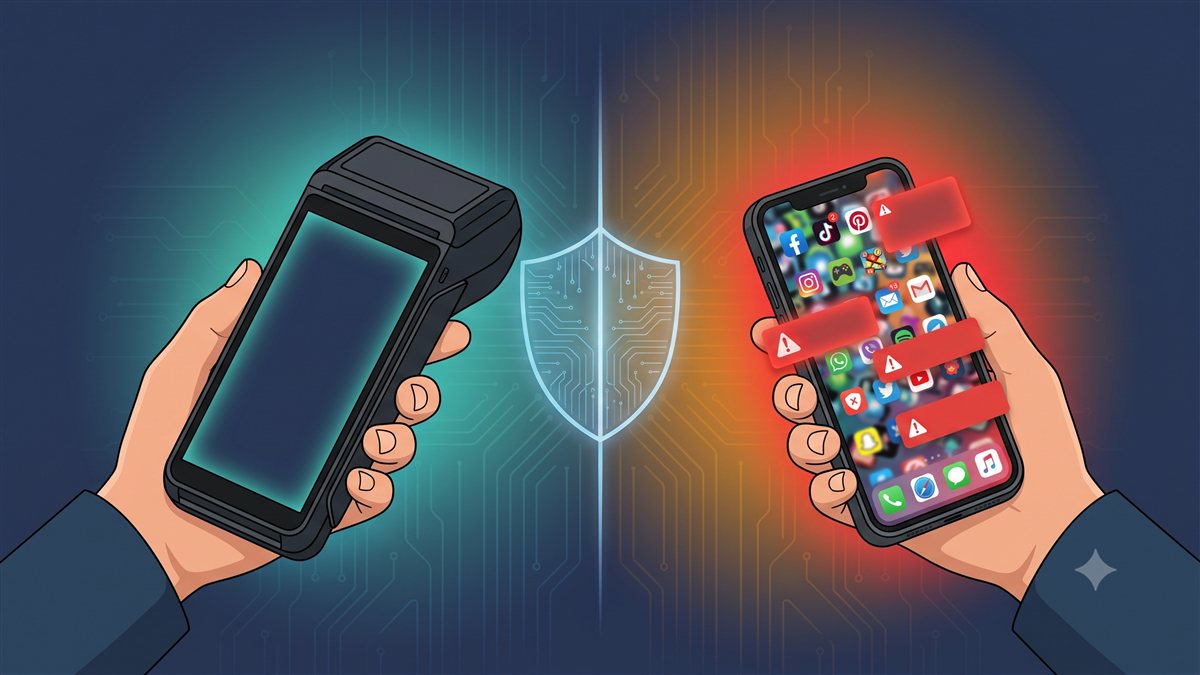
Why Agent Banking Security Starts With the Device, Not Just the App
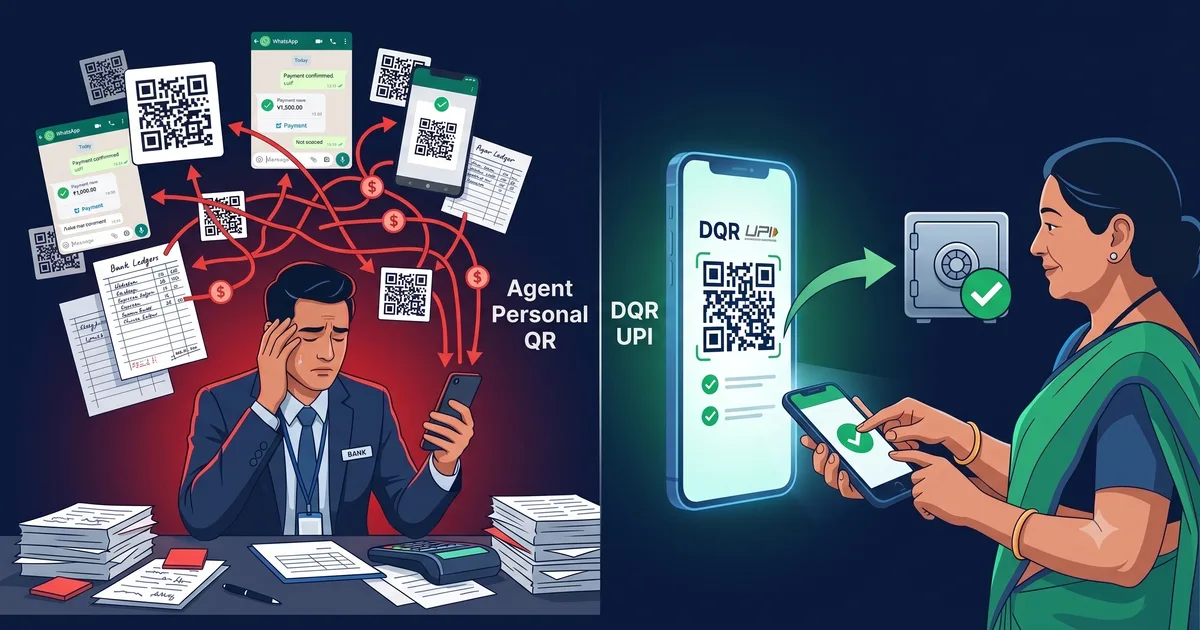
Why Agent UPI QR Codes Are a Reconciliation Trap — And What Smart Banks Are Doing Instead
ezPigmy
Ready to Digitize Your Pigmy Collection?
See how ezPigmy helps cooperative banks eliminate leakage, track agents in real time, and reconcile instantly.
Request a Free Demo